Mayo Clinic rheumatology discoveries through the decades
In the latest issue of Mayo Clinic Alumni magazine, we detailed the story of how Mayo Clinic biochemist Edward Kendall, Ph.D., and rheumatologist Philip Hench, M.D., won a Nobel Prize in 1950 for the discovery of cortisone.
But Dr. Hench and Dr. Kendall were not Mayo Clinic’s only disease detectives. Many other Mayo Clinic rheumatologists have sleuthed out the pathology, prevalence and treatment of rheumatic diseases for 100 years since Mayo Clinic’s rheumatology practice was started in 1926. Learn more about these discoveries below.

1947
Howard Polley, M.D., and Charles Slocumb, M.D., publish a study of 1,035 cases of rheumatoid spondylitis, making it — at the time — the largest study of what would become known as ankylosing spondylitis.
1969
Gene Hunder, M.D., is first author on the first American report of patients with polymyalgia rheumatica. The Division of Rheumatology at Mayo Clinic goes on to publish more than 150 studies on this disease and giant cell arteritis, leading to its status as a leader in the research of these conditions.
1985
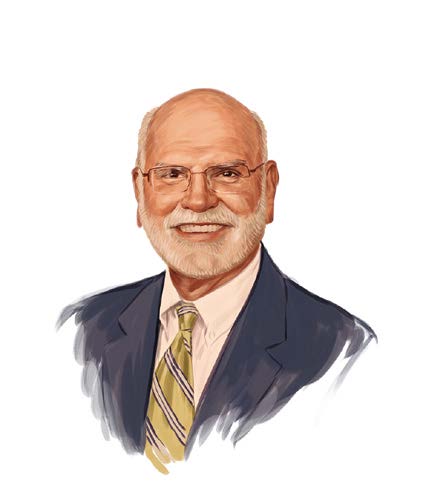
Clement Michet, M.D., et al. publish trends in the incidence and prevalence rates of systemic lupus erythematosus (SLE) and other connective tissue disorders over 30 years, the first major study to do so after the American Rheumatological Association revises SLE criteria in 1982.
“Using the resources of the Rochester Epidemiology Project, we were the first institution that completed credible studies to determine how common certain diseases are in the population, including lupus, RA, gout, scleroderma, sarcoidosis and many others.” – Eric Matteson, M.D.
1987
Dr. Hunder is the chair of the American College of Rheumatology Committee on Diagnostic and Therapeutic Criteria; the committee publishes revised classification criteria for RA that are then cited more than 10,000 times.
2003
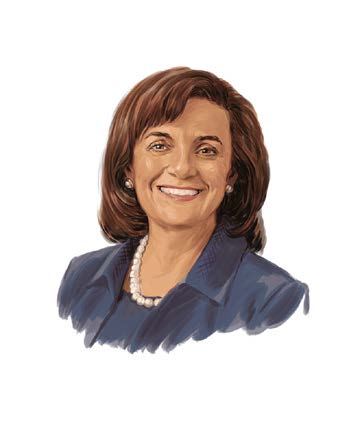
Sherine Gabriel, M.D., et al. publish a 40-year population study showing that survival in RA is reduced compared to the general population, pointing to extra-articular manifestations of RA as an important risk factor. Dr. Gabriel and Paulo Nicola, M.D., et al. go on to show that patients with RA have twice the risk of developing congestive heart failure as those without RA. They are also pioneers in demonstrating that people with RA are not only at higher risk of developing cardiovascular disease (CVD), but are more likely to have poor outcomes following CVD, including mortality.
“Dr. Gabriel advanced the epidemiology of RA and other rheumatic diseases and published some of the most seminal studies early on that showed that the excess mortality risk is driven largely by cardiovascular disease.” – John Davis III, M.D.
2012
Eric Matteson, M.D., is an author on the 2012 update of the American College of Rheumatology (ACR) recommendations on the use of disease-modifying antirheumatic drugs and biologic agents in treating RA, which goes on to be cited more than 2,000 times. He is also a lead investigator of a study of polymyalgia rheumatica leading to ACR classification criteria of this disease and to the 2015 ACR formal treatment recommendations.
2013
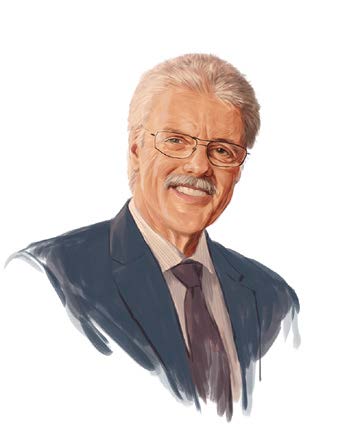
Mayo Clinic rheumatologists collaborate with Mayo Clinic pulmonologist Ulrich Specks, M.D., for the first clinical trial using rituximab to treat antineutrophil cytoplasmic antibodies (ANCA)-associated vasculitis, including granulomatosis with polyangiitis (GPA) and microscopic polyangiitis (MPA). It proves effective at inducing and maintaining remission and reducing the need for glucocorticoids.
“This was a major breakthrough made with researchers and clinicians in pulmonary medicine. Rituximab is now the standard treatment for these diseases, and it has changed the lives of these patients and drastically improved survival.” – Eric Matteson, M.D.
2021
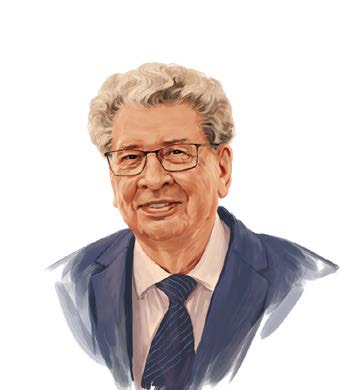
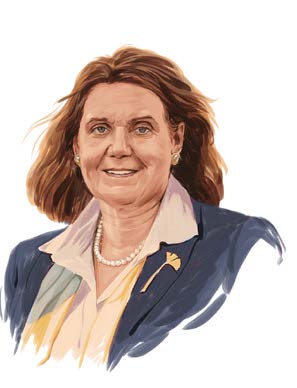
Cornelia Weyand, M.D., Ph.D., and Jorg Goronzy, M.D., Ph.D., start a translational program bringing research advances into the care of patients with autoimmune rheumatic diseases, building on the pair’s previous work in immune system aging and immuno-metabolism as drivers of autoimmunity.
“They have made immense contributions to the basic understanding of mechanisms of disease in RA and vasculitis. Their impactful lines of research and publications have informed much of the approach to the diagnosis and treatment of those diseases.” – John Davis III, M.D.
2022
Matthew Koster, M.D., and colleagues publish the first-ever trial of a “small molecule” Janus kinase inhibitor demonstrating efficacy in relapsing giant cell arteritis.
To read about a thrilling chapter in the 100-year story of rheumatology at Mayo Clinic, read the article on Dr. Hench and Dr. Kendall’s discovery of cortisone here.
Illustrations by
SAM HADLEY