Third-year medical student wins prestigious award for creating meaningful change in community.
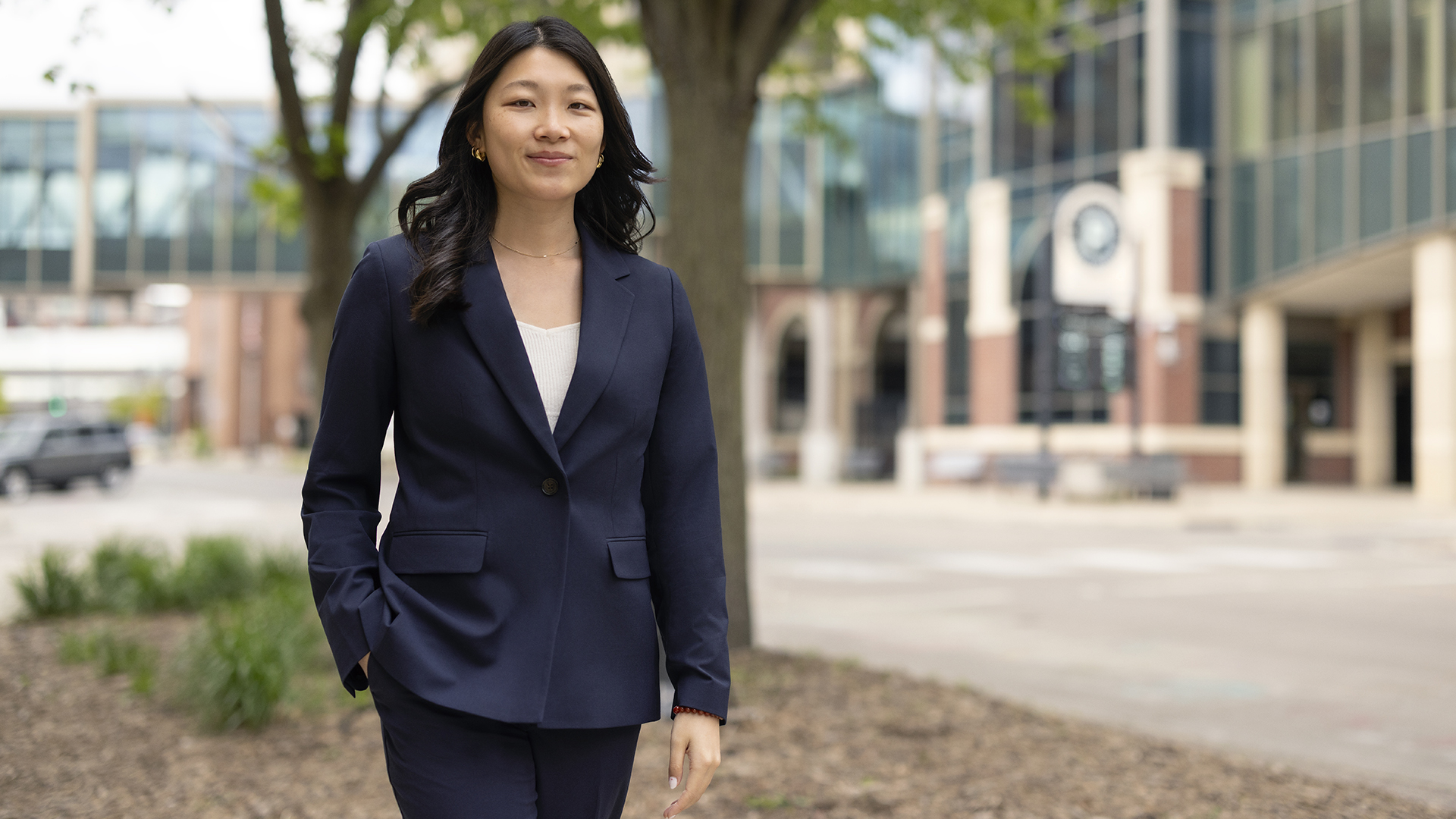
Kathryn Xu (MED ’27), a third-year medical student in the Mayo Clinic Alix School of Medicine, is a recent recipient of the Herbert W. Nickens Award from the Association of American Medical Colleges. Xu is one of only five third-year medical students nationwide who received the award for their leadership in efforts to promote equal opportunity in medical education and access to quality healthcare for people in underserved communities. She was recognized for her work in creating a free dermatology clinic for people experiencing homelessness and for launching a “Skin of Color” lecture series for medical students. Her path to receiving the award was not a linear one.
Where it all began
Medical school had not always been on Xu’s radar. She first imagined that she’d follow in her mother’s footsteps as a researcher. Born in Beijing, China, Xu immigrated to St. Louis, Missouri, when she was five years old with her mother, who had been a physician in China. Xu’s mother left that life behind to start over in the U.S. as a researcher in pediatrics so that Xu could have greater educational opportunities. Growing up as an immigrant with a single mother and limited financial support shaped Xu’s understanding of what it means to navigate inequities within unfamiliar systems.
While in college, Xu realized that the aspect of research she loved the most was the impact that it could have on patient care. Shadowing a physician through one of her labs, she enjoyed the experience of seeing patients, which cemented her interest in medical school. Xu took a gap year and worked as a medical assistant in a dermatology clinic and saw patients who had delayed medical care because of a lack of access or because they couldn’t afford the care. She also witnessed how skin conditions present differently in patients with skin of color and how these differences are often underrecognized or misdiagnosed. In that environment, she identified gaps in dermatologic care, which sparked her interest in dermatology as a career pathway with a goal of serving a diverse patient population.
Finding the right school
When Xu began exploring medical school and learned of the street medicine selective at Mayo Clinic Alix School of Medicine, she knew where she was headed. The street medicine selective is relatively new at the Rochester campus and offers students firsthand experience in caring for people who are unhoused. The program is held in conjunction with the Zumbro Valley Medical Society — a nonprofit professional membership organization serving 3,000 physicians and physicians in training in southern Minnesota.
“What we learn in medical school classrooms often differs from the kind of skills we need to provide care to patients in the real world, especially patients from underrepresented or marginalized communities.”
Kathryn Xu
“I thought that it was really amazing for an institution to support that program for medical students,” Xu says. ““”I became involved in the program in my first year. What we learn in medical school classrooms often differs from the kinds of skills we need to provide care to patients in the real world, especially patients from underrepresented or marginalized communities.”
Addressing unmet needs in the community
Xu is passionate about bringing care to people who are experiencing homelessness when and where they need it.
“We often expect patients to attend follow-up appointments, pick up their prescriptions on time and take their medications right away,” she says. “However, this isn’t feasible for all patients.”
Xu began to understand that access to care isn’t just where a clinic exists. It is whether care makes sense in the real conditions of a persons life.
Xu asked Beth Kangas, executive director of Zumbro Valley Medical Society, what the community needed. The response aligned perfectly with Xu’s own interest: dermatology care. Then, the real work began.
“It took a lot of planning,” Xu says. She gathered input from interested physicians and residents in Dermatology at Mayo Clinic as well as members of the community who had experienced homeless ness, whose perspective would be invaluable in planning the clinics.
“Having them there pointed us toward the right direction of resources we would need to tailor our clinics to people who need it,” Xu says. The dermatology clinics were launched at a local church that was already providing free meals on Saturdays that drew people in. The clinics were staffed with physicians, residents, nursing students, social work students and more.
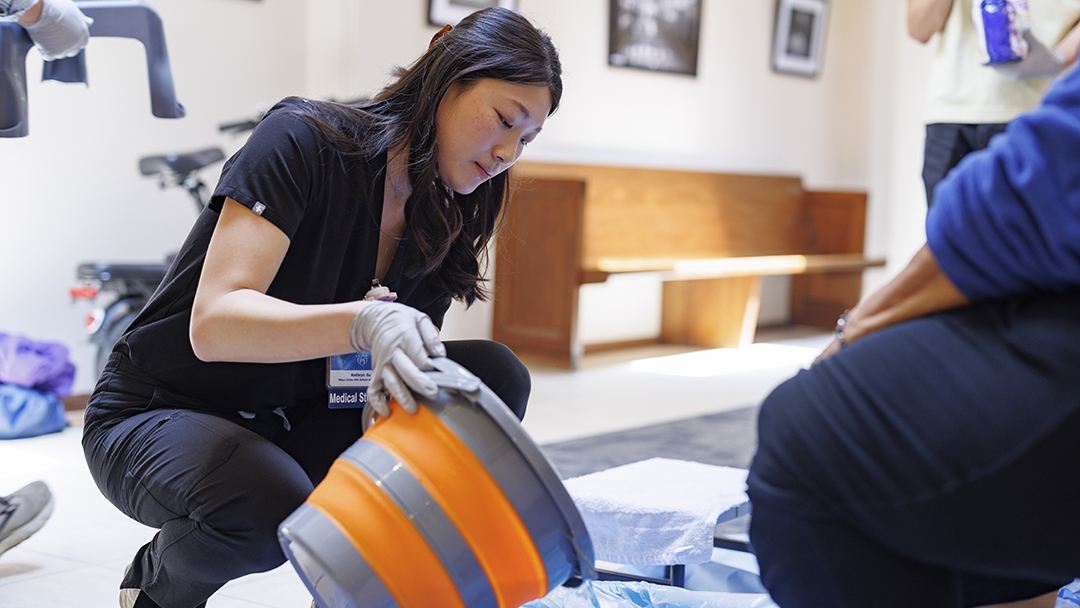
“It was a very multidisciplinary team inspired by Mayo as a whole and the team-based care that it provides,” Xu says.
The group identified that the most pressing needs of the community were free socks and shoes, and hygiene products. Xu and the team even arranged transportation to get people to the clinics.
“All of those things helped us be more approachable for the patients,” she says. Over time, the care team has built trust with the community and adapted to create resources, such as a list of places that offer free showers and free hygiene products that fit the needs of the patients.
While Xu was initially disappointed at the small turnout when the clinics first started, she has since learned the true meaning of success.
“It doesn’t matter how many patients we saw,” she says. “The fact that we’re able to help even one of them with a problem that they wouldn’t have otherwise sought help for is enough.” Xu credits Mayo Clinic’s Department of Dermatology and Zumbro Valley Medical Society for their support in keeping the clinics going.
“Mayo has been really generous with institutional support and Zumbro Valley Medical Society helped make these clinics possible through coordination and community grant funding,” she says.
Creating change through a conversation
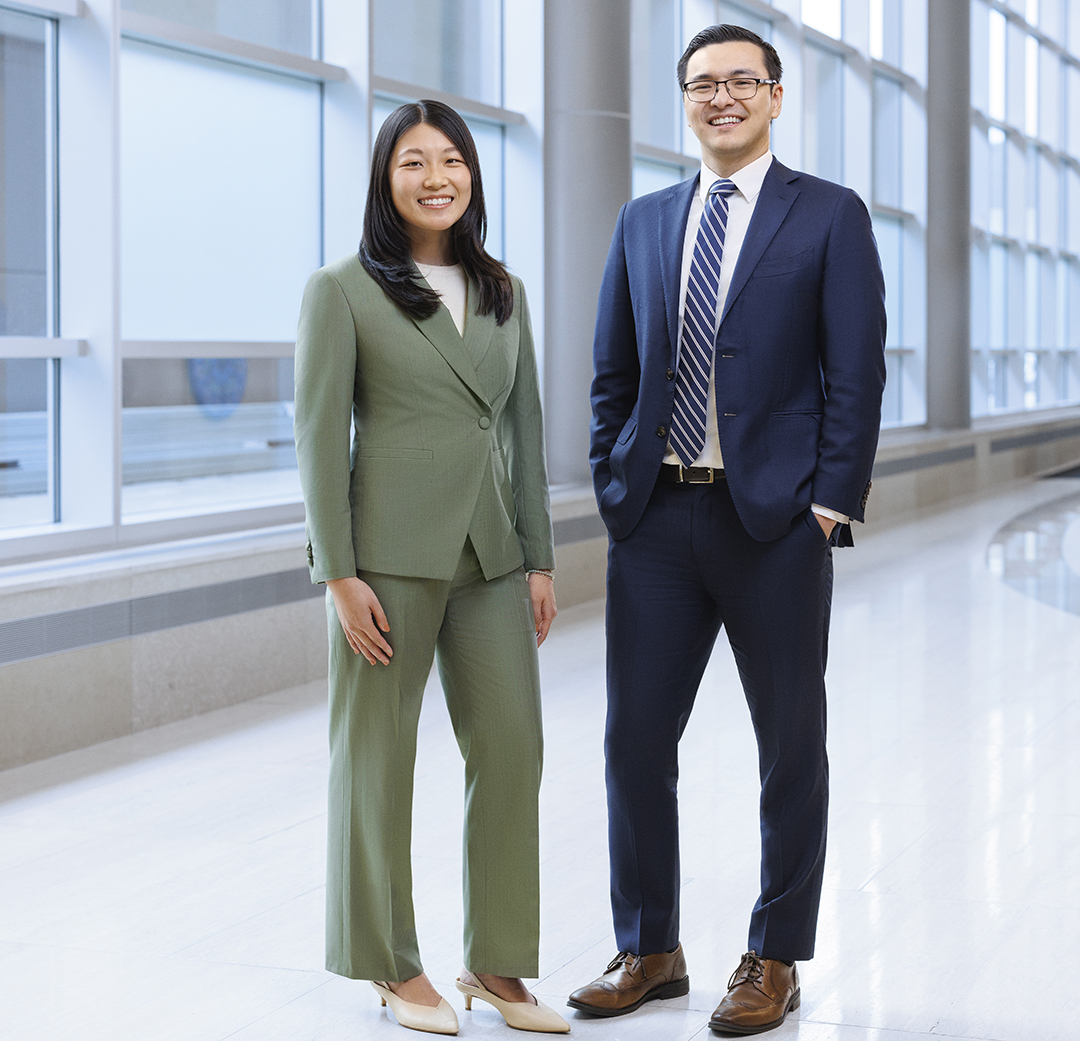
Xu’s second project ran parallel, driven by the same urgency to address a gap — this time, in medical education. Her mentor in medical school was Michael Zhang, M.D. (DERM ’25), a resident in dermatology at the time. Dr. Zhang listened as she outlined her concerns that traditional medical education typically did not address caring for diverse patient populations, especially those with skin of color. Disease doesn’t look the same on every skin tone — but students aren’t always taught that. Xu knew it from experience, from earlier work in dermatology, and from reading and seeing what standard materials routinely left out.
With Dr. Zhang’s help, Xu launched the Skin of Color lecture series to help bridge that gap. The lectures are run by students and residents and funded through medical school grants. Xu and Dr. Zhang were able to show that these lectures significantly improved medical students’ knowledge and confidence in diagnosing and managing skin diseases present in skin of color. The team is working on efforts to integrate the lectures across campuses and through formal curricula.
“I am incredibly proud of Kathryn and the leadership she has demonstrated in advancing meaningful conversations around dermatologic equity,” Dr. Zhang says. “Even as a medical student, she distinguishes herself as an independent thinker and thoughtful problem solver, consistently approaching complex issues with a level of maturity and intellectual rigor well beyond her stage of training — qualities rooted in genuine passion and curiosity. She is deeply caring toward her patients and colleagues alike, and her warmth and generosity of spirit make her a true joy to work with. It has been a privilege to support her vision for the Skin of Color lecture series and to help create space for advancing medical education and dermatologic equity, and I look forward to the lasting impact it will have long after she graduates from Mayo.”
Vested in the work
Xu sees the lectures and the clinics as important work that she hopes will continue after she has moved on to her residency.
“I’m really grateful because I have received a lot of support from Mayo Clinic,” Xu says. “I have been able to present at a lot of amazing conferences. I would never have had these opportunities if it weren’t for the people who came before me — especially people who believed in me and my projects. It is so important to keep investing in students.”