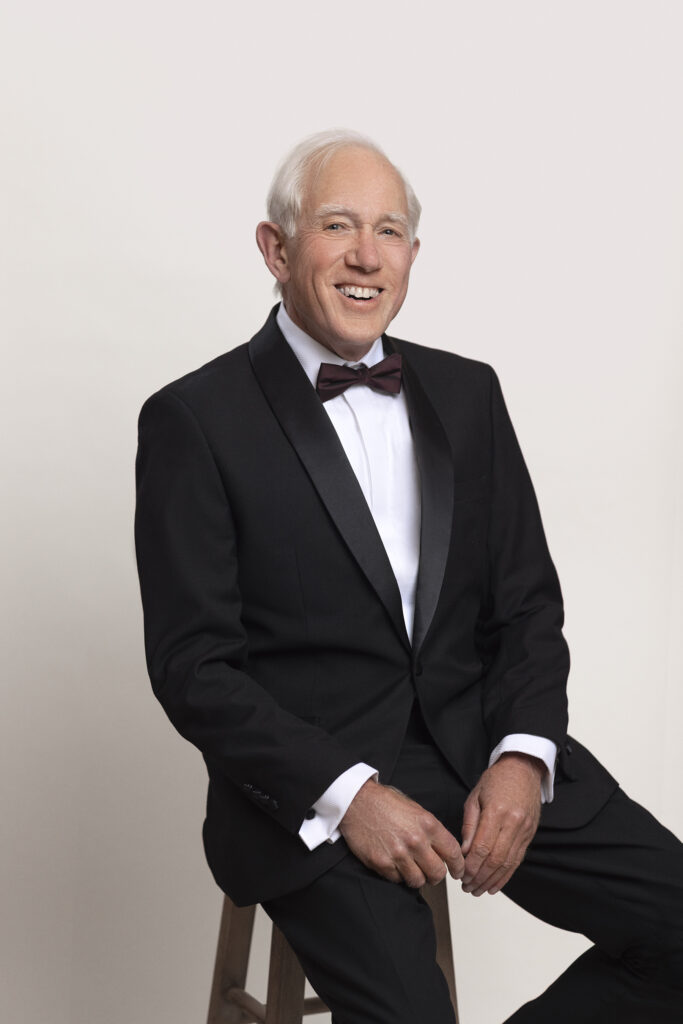
Emeritus professor of medicine
Mayo Clinic College of Medicine and Science
Rochester, Minnesota
Mayo Clinic in Minnesota: Emeritus professor of medicine, 2019–present; Arthur M. and Gladys D. Gray Professor in Honor of Dr. Howard A. Andersen, 1997–2019; professor of medicine, 1992–2019; consultant, Departments of Cardiovascular Medicine and Internal Medicine, 1981–2019; co-director, Nuclear Cardiology Laboratory, 1981–2005; associate professor of medicine, 1989–1992; assistant professor of medicine, 1981–1989
Fellowship: Cardiology, Duke University Medical Center, Durham, North Carolina
Residency: Internal medicine, Massachusetts General Hospital, Boston, Massachusetts
Internship: Internal medicine, Massachusetts General Hospital
Medical school: Harvard Medical School, Harvard-MIT Program in Health Sciences Technology, Boston, Massachusetts
Postgraduate: M.Sc., mathematics, New College, Oxford University, Oxford, England (Rhodes Scholarship); Biomedical engineering, Johns Hopkins University, Baltimore, Maryland
Undergraduate: Aerospace and mechanical sciences, Princeton University, Princeton, New Jersey
Hometown: Wood-Ridge, New Jersey
LEADER IN CARDIOLOGY AND HEALTHCARE REFORM
The federal debate on healthcare reform in the early 2000s was complicated and extremely controversial. As president of the American Heart Association (AHA), Raymond Gibbons, M.D. (CV ’81), addressed the topic head-on in his 2006 AHA presidential address.
“Our ability to reduce disability and death from cardiovascular disease and stroke is threatened by the growing crisis in healthcare delivery,” he said as he advocated for open dialog to build a mandate for change.
His national healthcare reform work continued for four years; he was the lead author on the AHA’s Statement of Principles for Healthcare Reform, represented the AHA and Mayo Clinic on Capitol Hill, and helped develop the Mayo Health Policy Center Value Proposal that ultimately became the Cantwell Amendment to the Affordable Care Act.
Dr. Gibbons is an emeritus professor of medicine at Mayo Clinic College of Medicine and Science and a retired consultant in the Department of Cardiovascular Medicine at Mayo Clinic in Minnesota. He is a compassionate physician with world-class clinical acumen and broad expertise in many areas of cardiovascular disease, particularly coronary artery disease.
Dr. Gibbons was a pioneer in writing the earliest clinical practice guidelines addressing stress testing and chronic coronary artery disease management; these efforts set the standard for subsequent guideline development in other subspecialty fields of cardiology.
He published more than 400 peer-reviewed manuscripts during his career, many of which were first-authored by 49 different Mayo Clinic cardiac fellows under his mentorship. His mentorship emphasized scientific rigor, which was the focus of his widely acclaimed Mario S. Verani, M.D., Memorial Lecture to the American Society of Nuclear Cardiology (ASNC).
Dr. Gibbons established the Mayo Clinic Nuclear Cardiology Laboratory with the Department of Laboratory Medicine in 1981 and served as its co-director until 2005. Under his leadership, the lab developed and validated a measurement of myocardial infarct size that was used as a gold-standard endpoint in multiple randomized clinical trials for more than a decade.
A gifted clinical teacher, Dr. Gibbons emphasized the importance of evidence-based medicine in clinical practice and championed this viewpoint on many committees within major societies, such as the AHA, ASNC, National Heart, Lung, and Blood Institute, American College of Cardiology (ACC) and the Institute of Medicine. His awards and honors include the ACC Distinguished Fellow Award and AHA Distinguished Achievement Award.
The Mayo Clinic Distinguished Alumni Award was established in 1981 by the Mayo Clinic Board of Trustees to acknowledge and show appreciation for the exceptional contributions of Mayo alumni to the field of medicine, including medical practice, research, education, and administration. Individuals receiving this award are recognized nationally — and often internationally — in their fields. Read about the other 2025 recipients here.