Graduate student searches for cure for lethal adult primary brain tumor.
When Sidney Weaver (MPET ’27), packed her bags and moved from Stevensville, Michigan, to Phoenix, Arizona, she had a clear purpose in mind. She wanted to be a part of the process that brings therapeutic treatments for diseases that don’t have a cure yet.
Years earlier, as an undergraduate student at Grand Valley State University in Grand Rapids, Michigan, Weaver was majoring in biomedical science with an eye toward medicine. She joined a research lab to strengthen her résumé ahead of taking the Medical College Admission Test. After two years in the lab, Weaver found herself staying up late exploring scientific literature, eagerly heading to lab after classes and spending countless hours discussing ideas with her undergraduate mentor. But was she ready to pivot to a career in research? She didn’t know yet.
Undecided, Weaver joined a research lab at the University of Michigan, where she worked on projects related to drug discovery. Around that same time, a pivotal moment for her family helped her firm up her decision.
Her grandfather was told he would need a double lung transplant. There was an option that would significantly increase his chances of getting that transplant. It was a clinical trial that was not yet FDA-approved, and Weaver’s grandparents were ready to sign up for it. However, the rest of the family needed some convincing. With her background in biomedical science and her recent experience in the drug discovery research lab, Weaver was able to translate the medical jargon and explain the process of clinical trials to her family. He wasn’t going to be experimented on, she explained to them.
Her grandfather received his transplant and is still here today — present at weddings, meeting his grandchildren and great-grandchild, living in years that once felt uncertain.
“It’s definitely helped create a lot more memories,” Weaver says. “The idea of being a part of that for someone else is what ultimately motivated me.” Graduate school was no longer a fallback plan. It became the plan.
Discovering Mayo Clinic as an educational institution
Like many outside the institution, Weaver initially knew of Mayo Clinic as one of the world’s top hospitals. When a friend mentioned its graduate programs, Weaver started digging deeper. Information sessions for the Mayo Clinic Graduate School of Biomedical Sciences introduced her to the Molecular Pharmacology and Experimental Therapeutics (MPET) Ph.D. track — an ideal fit for someone drawn to drug discovery and therapeutic development. The appeal was clear: a nontraditional academic environment embedded within a leading medical center.
“I chose Mayo Clinic because of its opportunities in translational research, its reputation for advancing biomedical sciences and the competitive stipend that supports graduate students,” Weaver says. “In addition, the graduate school’s tri-site academic structure allows students to prosper from any site they choose.” “It’s a unique place to learn and grow,” she says. “You’re surrounded by people who are directly connected to patient care.”
Tacking one of cancer’s toughest diagnoses
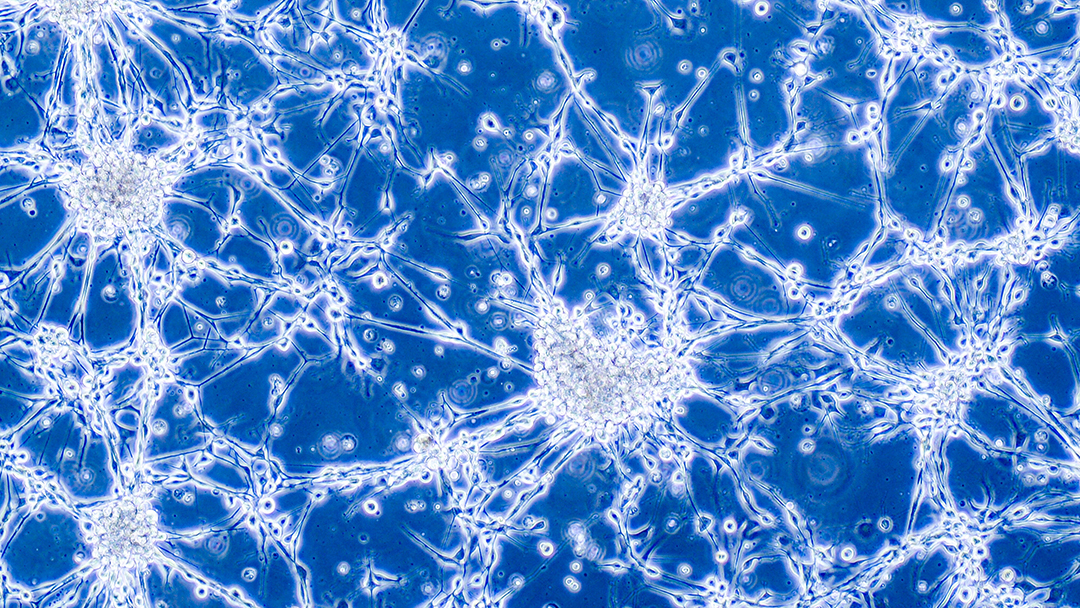
As a graduate student in the cancer biology lab of Nhan Tran, Ph.D. (CB ’16), Weaver focuses on understanding therapeutic resistance in glioblastoma, the most lethal adult primary brain tumor with a five-year survival rate of less than 5%. Despite advances across oncology, the standard-of-care protocol for glioblastoma traces back to 2005. Average survival remains just 12 to 15 months after diagnosis. Recurrence is almost inevitable. That reality fuels her work.
Weaver studies molecular signaling pathways that become dysregulated in glioblastoma, investigating how they drive disease progression and whether they can be targeted to open new therapeutic doors. It’s meticulous, often unpredictable work. Hypotheses fail. Experiments require redesign.
“That’s what’s most exciting about being a scientist,” she says. “We’re not following a textbook. We’re part of the discovery process.” That process, she emphasizes, is never solitary.
Dr. Tran’s lab includes students from multiple graduate tracks — immunology, clinical and translational science, biochemistry and more.
“I have the support from my mentors, lab mates and colleagues,” Weaver says. “Through teamwork and collaboration, nothing is impossible to overcome.”

The multidisciplinary makeup of the lab allows for different perspectives to co-exist, facilitates interesting conversations and helps troubleshoot new protocols.
“It feels like a second family,” she says. “We learn from each other every day.”
Stepping onto the global stage
Weaver’s journey has already taken her far beyond Arizona. After submitting an abstract to a specialized American Association for Cancer Research conference in Spain — focused on molecular targets and cancer therapeutics — she applied for a Young Scientist Grant offered by the conference organizers. She didn’t realize at the time that only five applicants worldwide would receive the award. The grant funded her travel and allowed her to present her research on an international stage alongside leaders in cancer research. Standing in front of that audience reinforced something important.
“There’s always a little imposter syndrome,” she says. “But you get to a point where you realize, you know your data better than anyone else.” The conference reassured her that she was on the right path to discovering new therapies.
Leadership and community
Beyond the lab bench, Weaver has invested deeply in graduate student life. She served as the Arizona site representative for the Graduate Student Association and later as co-president of the organization across campuses. “That involvement is really special because it helps facilitate community amongst students,” she says. “It’s important for us to feel supported — not just within our lab — but across disciplines and campuses.”
Looking ahead
Five years from now, Weaver sees herself still rooted in science — leading projects, continuing her curiosity in cancer research and drug discovery.
“I’m always thinking, what if?” she said. “What if we looked at it another way?”